Medical note. This article is for education only. It does not replace urgent care or advice from your own clinician. If you notice sudden facial drooping, arm weakness, trouble speaking, major balance loss, or sudden vision changes, call 911 right away.
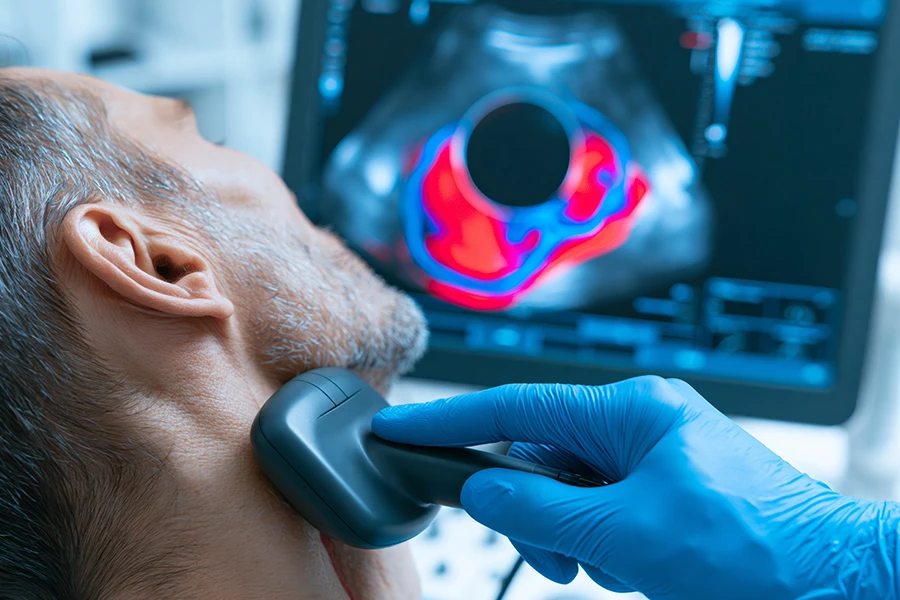
Carotid artery screening sounds like a test every adult should add the moment they turn 40. The honest answer is more specific than that. A carotid ultrasound earns its place when someone already carries vascular risk – not as a routine box to tick for a healthy person who feels well and has no symptoms.
Here is what we tell our own families. The people who benefit most from this scan are adults with risk factors like high blood pressure, high cholesterol, diabetes, a smoking history, known heart disease, or a strong family history of stroke. If that describes you, a carotid screening can answer a real question. If it does not, the test may add little.
The U.S. Preventive Services Task Force recommends against routine screening for adults in the general population who have no symptoms. That position is not a knock on the technology. It is a reminder that the right test for the right person is what makes any screening useful.
This guide covers who should get a carotid artery screening, who can usually skip it, what the scan looks for, and how to read the results. If you want the plain definition first, our explainer on what carotid screening involves is a good starting point. Here, we focus on the harder question – should you be the one booking it.
The short answer
- What it looks for. Plaque and narrowing in the carotid arteries that carry blood to your brain.
- Who it fits. Adults with vascular risk factors, far more than average-risk adults who feel fine.
- What results trigger. A closer look at stroke risk, cholesterol, blood pressure, and follow-up care.
- What it is not. An emergency test. Sudden stroke symptoms need 911, not a scheduled scan.
What a carotid artery screening checks
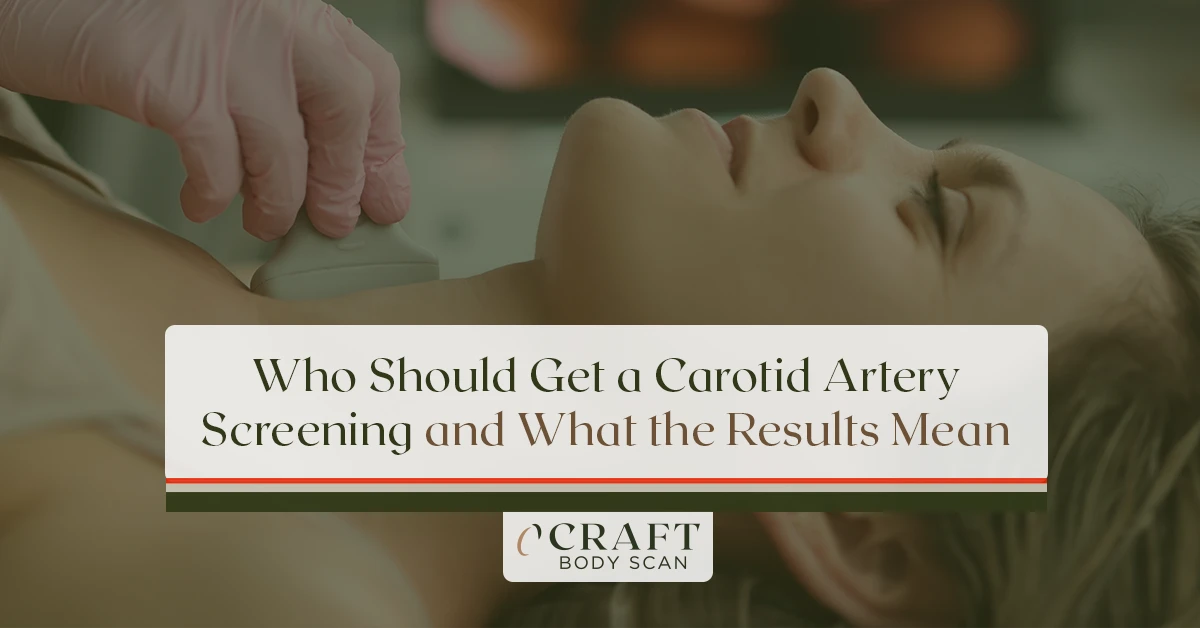
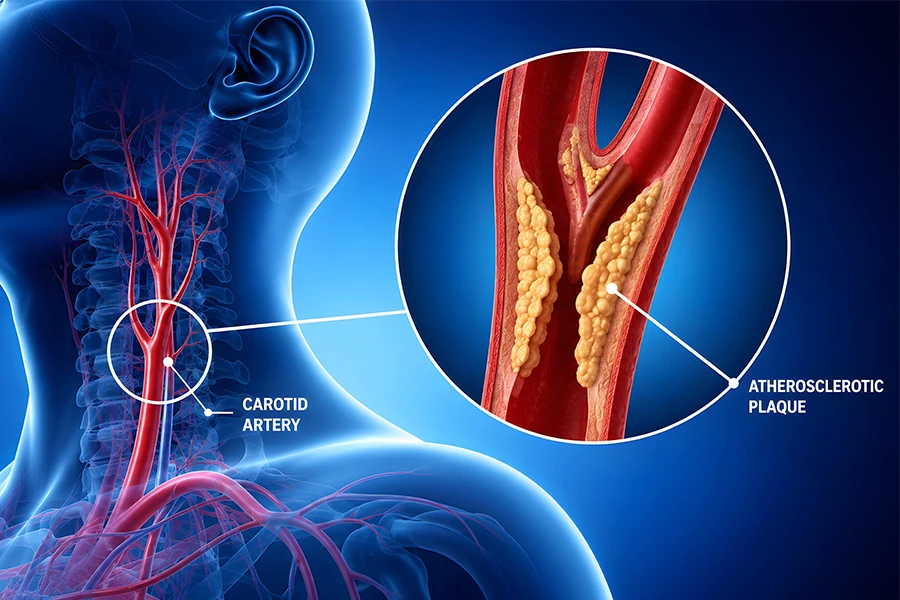
A carotid artery screening is an ultrasound of the two carotid arteries in your neck. Those arteries carry oxygen-rich blood from the heart to the brain. When plaque collects along the artery wall, it narrows the channel blood moves through, and that narrowing is what the scan measures.
According to RadiologyInfo, the exam uses sound waves to look for narrowing that can raise stroke risk. No radiation is involved. Many exams add Doppler ultrasound, which shows how fast blood is moving and whether the flow pattern looks normal.
The exam is quick and painless, and a board-certified radiologist reviews the images. You can see how we frame it on the carotid screening service page, where it sits inside a wider preventive imaging menu. The aim is early insight, not a real-time emergency diagnosis.
Who should get a carotid artery screening
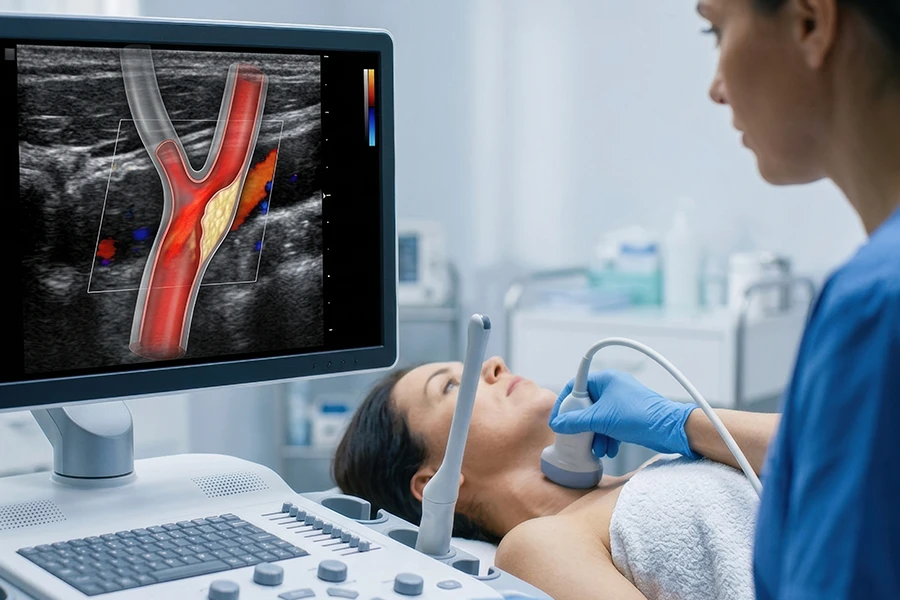
The phrase carotid ultrasound who needs it almost always comes back to risk. The test makes sense when your age, your history, or a physical exam already point toward artery disease. It makes far less sense when none of those flags are present.
Carotid artery screening guidelines draw a clear line between average-risk adults and people whose risk picture has already shifted. The USPSTF recommendation applies to adults with no stroke history, no transient ischemic attack symptoms, and no other neurologic signs. For that group, the task force found the harms of routine screening can outweigh the benefits.
So who sits on the other side of that line? RadiologyInfo describes a narrower group worth the conversation – people with coronary artery disease, peripheral artery disease, an atherosclerotic aortic aneurysm, or at least two stroke risk factors. The USPSTF names older age, male sex, high blood pressure, smoking, high cholesterol, diabetes, and heart disease among the factors tied to higher carotid artery stenosis risk.
There is one more trigger, and it comes from the exam room rather than your history. If a clinician hears a carotid bruit – an unusual whooshing sound over the artery – imaging is a reasonable next step. A bruit does not diagnose a blockage on its own. It is a prompt to look closer.
People who may want the conversation
- Adults over 55 who also carry cardiovascular risk factors
- Current or former smokers with high blood pressure or high cholesterol
- People with diabetes, coronary artery disease, or peripheral artery disease
- A close family history of early atherosclerosis or ischemic stroke
- Anyone with a carotid bruit their clinician wants to investigate with imaging
- People reviewing vascular risk after abnormal labs or other screening results
The role of family history in stroke risk
Family history carries real weight here, and it helps to be specific about why. A parent or sibling who had an early stroke, early artery disease, or heavy plaque buildup raises your baseline risk – especially when it stacks on top of your own blood pressure, cholesterol, or smoking history.
That does not mean you need imaging tomorrow. It means the family pattern belongs in the conversation with your clinician. One relative with a stroke at 85 is different from a parent who had one at 55. The earlier and the more clustered the history, the more it counts.
If this feels close to home, two of our guides pair well with this one. There is a look at high cholesterol warning signs, since plaque can build for years without an obvious signal, and a broader heart health overview for the full vascular picture.
When a carotid screening may not make sense
A good preventive plan does not send everyone to the same scan. If you feel well, have no neurologic symptoms, and carry few vascular risk factors, a routine carotid screening may add little. That is the logic behind the USPSTF position on the general population.
The caution is practical, not philosophical. In low-risk groups, a borderline or false-positive result can lead to more testing, more worry, and procedures whose downsides may outweigh what they fix. Screening helps most when the odds of finding something worth acting on are reasonable to begin with.
Carotid plaque is also only one slice of stroke risk. Blood pressure, cholesterol, diabetes, smoking, and atrial fibrillation often matter just as much. Depending on what is driving your concern, a heart-focused scan, a wider preventive plan, or a plain risk-factor review with your doctor may be the better first move.
Carotid screening compared with heart and full body scans
Most people are not weighing one scan in a vacuum. They are trying to match a test to the worry sitting in the back of their mind – stroke risk from neck plaque, hidden heart disease, or a wider look because the family history feels heavy.
If the worry is stroke risk from carotid plaque, the neck ultrasound is the direct answer. If it is the heart, start there instead. And if circulation in your legs is part of the picture, peripheral arterial disease screening looks at a related problem.
Not sure what the visit even feels like? Our walkthrough of a first scan appointment makes the logistics easier to picture before you commit to anything.
What your carotid screening results can mean
People search this topic because they want to know what happens after the scan. Most results do not land in a tidy pass-or-fail bucket. They fall into a range, and that range shapes the next conversation more than any single word on the report.
Your result never stands alone. Age, symptoms, smoking history, blood pressure, cholesterol, diabetes, and other heart findings all change what the report means in practice. A finding of plaque is the start of a plan, not a verdict.
That is also why many people move from a single carotid question into a wider vascular plan. If you are weighing what to screen and what it costs, the pricing page lays out the preventive imaging options side by side.
How to prepare and what to expect

Carotid ultrasound is one of the lower-stress scans we offer. You lie back on an exam table while a technologist applies a little gel to your neck and moves a small handheld probe over the skin. The main sensation is light pressure. No needles, no dye, no radiation.
RadiologyInfo notes that little or no special preparation is usually needed. Loose clothing that leaves your neck easy to reach is the one practical tip worth following.
If imaging makes you uneasy, this exam feels closer to a routine check than a procedure. The scan is short, you stay awake and comfortable the whole time, and you can drive yourself home afterward.
Questions worth asking before you book
- Do my risk factors fit? Age, blood pressure, cholesterol, diabetes, smoking, and family history all count.
- What would a result change? Ask how a finding would actually shape your prevention plan.
- Who reads the images? A board-certified radiologist should review and report the scan.
- What if something shows up? Confirm how results and follow-up are handled.
- Is this the right first test? A heart or broader vascular question may point somewhere else.
Stroke warning signs that need emergency care
Carotid screening is for calm, planned risk review. It is not the test to book when stroke symptoms may be happening right now.
Stroke is a leading cause of serious long-term disability in the United States, according to the CDC, and the warning signs tend to arrive suddenly. Watch for numbness or weakness on one side, trouble speaking or understanding speech, vision trouble, loss of balance, or a sudden severe headache.
If any of those appear, call 911. A preventive ultrasound appointment is the wrong setting for an active stroke. Our stroke brain scan guide explains why hospital imaging within the first hours changes what doctors are able to do.
This holds even when symptoms fade fast. A transient ischemic attack can last minutes and clear on its own, yet it can be the warning before a larger stroke. Brief does not mean harmless. Quick evaluation still counts.
Carotid screening at Craft Body Scan
If your risk factors point toward a carotid screening, here is how it works with us. You can book a carotid ultrasound without a physician referral, a board-certified radiologist reviews your images, and you get your results explained in plain language rather than left to decode a report alone.
We treat the scan as one input, not a diagnosis. Our radiologists read what the images show, flag anything that deserves a closer look, and point you back to your own physician when follow-up makes sense. You can review credentials on our radiology team page before you decide anything.
Because our clinics sit across several states, many people fold a carotid screening into a wider visit rather than making a separate trip. The honest goal is to answer your risk question, not to sell you a longer list of scans than you need.
Frequently Asked Questions
Does a carotid artery screening hurt
Not in any real sense. The exam uses a handheld ultrasound probe on the outside of your neck. There are no needles and no injection. Most people feel only light pressure and a bit of cool gel.
How long does a carotid ultrasound take
The scan itself is usually short. Plan for an appointment window that covers check-in, positioning, the exam, and a brief review of next steps. You can return to normal activity right after.
Do I need symptoms to talk about carotid artery disease screening
No. Many people asking about this test feel completely well. The better question is whether your risk profile makes the conversation worthwhile. Smoking history, blood pressure, cholesterol, diabetes, heart disease, and family history are what tip the scale.
What are the signs of a blocked carotid artery
Often there are none until a scan finds plaque, which is exactly why risk-based screening exists. When symptoms do appear, they can mimic stroke or a transient ischemic attack, such as sudden weakness, speech trouble, or vision changes. Those are emergencies that need 911, not a scheduled scan.
Can a carotid screening replace a heart scan
No. The two answer different questions. A carotid screening looks at plaque and flow in the neck arteries feeding the brain. A heart scan looks at coronary risk. Some people start with one. Others discuss both over time, and your risk factors guide the order.
Do I need a doctor referral to book
Booking rules vary by provider and state. At Craft Body Scan you can schedule a carotid screening without a referral, though it is always reasonable to loop in your own physician so the result lands inside your broader care.
How much does a carotid artery screening cost
Carotid screening is a private-pay service, so the price is set per scan rather than billed through insurance. Costs vary by location and by whether you bundle it with other imaging, and the current options are listed on our pricing page so you can compare before you commit.
Take the next step
Match the scan to the risk question
If stroke risk from neck artery plaque is your main concern, a carotid screening may be the right preventive conversation. If your worry is broader, another test may fit better. Start with the risk question, then choose the scan that answers it.
You can review your options, compare costs, and book when the timing feels right. A board-certified radiologist reads every scan.