
Stop worrying about your upcoming scan. Many patients experience raised anxiety before medical imaging procedures, with women and first-time patients reporting even higher stress levels. But here’s what most people don’t realize – imaging anxiety doesn’t have to control your experience. Simple breathing techniques, mental preparation, and modern imaging center support can turn a stressful appointment into a manageable health step.
Medical imaging scans like CT and MRI provide critical health insights, yet the anticipation often triggers more distress than the procedure itself. Studies reveal that anxiety peaks when patients worry about scan results, the unknown experience, or confined spaces during the imaging process. The good news? You have control over how you approach your scan day, and imaging centers now offer evidence-based comfort measures specifically designed to reduce imaging anxiety.

Why Medical Imaging Creates Anxiety
Understanding the root of imaging anxiety helps you address it directly. Research involving over 6,000 patients found that 14% experienced significant anxiety before CT scans, with multiple factors contributing to their stress.
The most common anxiety triggers include:
- Fear of results – Approximately 48% of anxious patients report worrying most about what the scan might reveal about their health
- First-time uncertainty – Patients undergoing their first scan show significantly higher anxiety levels compared to those with previous imaging experience
- Confined space concerns – MRI machines and CT scanners can trigger claustrophobia, particularly in patients who feel uncomfortable in enclosed environments
- Physical discomfort – Lying still for extended periods, the noise from MRI machines, and concerns about contrast agents contribute to pre-scan stress
- Loss of control – Being positioned in medical equipment while technologists operate machinery from another room creates feelings of vulnerability
Women consistently report higher anxiety levels than men across all imaging types. Patients receiving contrast agents also experience elevated stress compared to those undergoing contrast-free scans. These patterns matter because they show imaging anxiety affects specific groups more intensely – meaning targeted strategies can make a measurable difference in your experience.
The Physical Impact of Imaging Anxiety
Scan-related stress doesn’t just affect your mental state – it creates real physical responses that can actually interfere with image quality. When anxiety takes over, your body responds with increased heart rate, muscle tension, and shallow breathing. These physiological changes make it harder to remain still during the scan, potentially requiring repeat imaging or extended scan times.
Motion artifacts caused by anxiety-related movement blur CT and MRI images, reducing diagnostic accuracy. In some cases, severe anxiety leads to appointment cancellations, no-shows, or the need for sedation – complications that delay diagnosis and increase healthcare costs.
The cycle works like this: anxiety creates physical tension, tension triggers movement or discomfort, discomfort increases anxiety, and the pattern continues. Breaking this cycle requires practical interventions before and during your scan – strategies proven to lower stress and improve outcomes.
Evidence-Based Breathing Techniques to Reduce Imaging Anxiety
Breathing exercises offer one of the fastest, most accessible ways to calm your nervous system before and during medical imaging. These techniques activate your parasympathetic nervous system – the body’s natural relaxation response – slowing your heart rate and reducing physical tension within minutes.
Research demonstrates that controlled breathing practices effectively reduce stress and anxiety across diverse populations. A detailed review of breathing interventions found that sessions as short as 5 minutes produce measurable anxiety reduction, making these techniques ideal for pre-scan preparation.
Cyclic Sighing: The Stanford-Proven Method
Stanford Medicine researchers identified cyclic sighing as particularly effective for reducing anxiety, with participants reporting calmer moods and decreased stress after just 5 minutes of practice. This technique emphasizes long exhalations, which directly activate the parasympathetic nervous system.
Here’s how to practice cyclic sighing:
- Breathe in slowly through your nose until your lungs feel comfortably full
- Take a second, deeper breath – a small “sip” of air to expand your lungs completely
- Exhale very slowly through your mouth until all air has left your lungs
- Repeat for 5 minutes or until you notice a calmer state
The extended exhalation component makes this technique especially effective. Exhalation activates the vagus nerve, which signals your body to shift from stress response to relaxation mode. Patients can practice cyclic sighing in the waiting room, on the exam table, or even during the scan itself.
Box Breathing: Four Counts to Calm
Box breathing – also called square breathing – helps regulate oxygen and carbon dioxide levels that anxiety often throws out of balance. This method uses equal counts for each phase of breathing, creating a predictable rhythm that quiets racing thoughts.
To practice box breathing:
- Inhale through your nose for a count of 4
- Hold your breath for a count of 4
- Exhale through your mouth for a count of 4
- Hold empty for a count of 4
- Repeat the cycle for several minutes
This technique works well during MRI scans when you need to remain still but want an active mental focus. The counting provides a distraction from scan noises while the breathing pattern keeps your body relaxed. Many patients find box breathing easier to remember under stress than more complex methods.
Diaphragmatic Breathing for Full-Body Relaxation
Diaphragmatic breathing – sometimes called belly breathing – reduces the work your body needs to perform for each breath while promoting deeper relaxation. Studies show this technique consistently produces positive effects on stress reduction across both healthy adults and patients with clinical anxiety.
Practice this method before your scan:
- Sit or lie comfortably with one hand on your chest and one on your belly
- Breathe in slowly through your nose allowing your belly to rise while your chest stays relatively still
- Exhale through your nose or mouth feeling your belly fall
- Continue for 5-10 minutes focusing on the rise and fall of your abdomen
The key difference from normal breathing is belly movement – your diaphragm does the work instead of your chest muscles. This shift signals your nervous system that you’re safe, triggering the relaxation response. Patients report feeling noticeably calmer after practicing diaphragmatic breathing for just a few minutes.
When to Practice Your Breathing Technique
Timing matters when using breathing exercises to reduce imaging anxiety. Start practicing your chosen technique days before your scheduled scan, building familiarity so it becomes automatic under stress. On scan day, use breathing exercises:
- During your commute to the imaging center
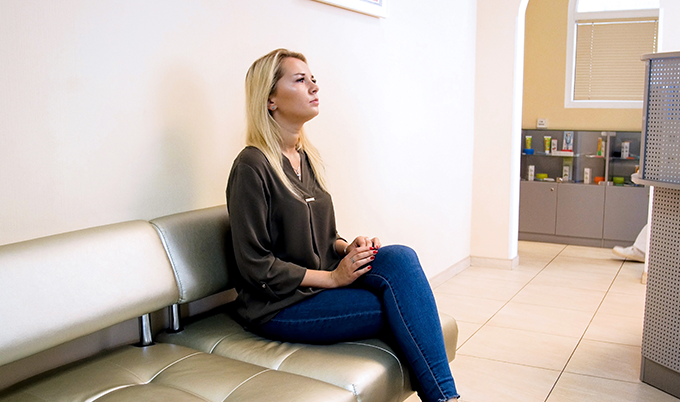
- In the waiting room while completing paperwork or waiting to be called
- On the exam table as technologists prepare the equipment
- Throughout the actual scan to maintain calm and stillness
Don’t wait until panic sets in. Preventive practice produces better results than crisis intervention. One study found that patients who practiced breathing techniques before anxiety peaked maintained lower stress levels throughout medical procedures compared to those who only used the techniques after anxiety developed.
Mental Preparation Strategies Beyond Breathing
Breathing exercises work, but they’re even more effective when combined with other evidence-based anxiety reduction strategies. Mental preparation techniques give you additional tools for managing scan-related stress, particularly when claustrophobia or result-anxiety dominates your concerns.
Guided Imagery: Creating Your Mental Escape
Guided imagery involves deliberately creating vivid mental images that promote relaxation and reduce stress. This centuries-old technique works by engaging your mind in detailed visualization, effectively competing with anxiety-producing thoughts for your attention.
Research demonstrates that guided imagery reduces anxiety in cancer patients undergoing medical procedures and helps manage stress across diverse healthcare settings. The technique activates the same neural pathways whether you’re actually experiencing a calming environment or simply imagining one in detail.
To practice guided imagery before your scan:
- Choose a peaceful location from your memory – a favorite beach, mountain trail, or comfortable room
- Close your eyes and recreate the scene using all five senses
- Add specific details – what do you see, hear, smell, feel, and taste?
- Spend 5-10 minutes fully immersed in this mental environment
- Return to this scene during your scan when anxiety surfaces
During an MRI, you might imagine lying on a warm beach, the scanner noise becoming rhythmic waves in your mind. For CT scans, visualize floating peacefully in a calm lake, the table movement becoming gentle water motion. The more sensory details you include, the more completely guided imagery occupies your mind – leaving less mental space for anxiety.
Progressive Muscle Relaxation: Releasing Physical Tension
Anxiety often manifests as muscle tension throughout your body. Progressive muscle relaxation teaches you to identify and release this tension systematically, helping your brain recognize the difference between tense and relaxed states.
This technique involves tensing and releasing muscle groups in sequence:
- Start with your toes – curl them tightly for 10 seconds, then release for 10 seconds
- Move to your calves – tense the muscles, hold, then release
- Continue upward through thighs, abdomen, chest, arms, hands, neck, and face
- Notice the contrast between tension and relaxation in each muscle group
- Take slow breaths throughout the entire process
Practice progressive muscle relaxation the night before your scan to promote better sleep. Many patients find this technique particularly helpful for releasing pre-scan tension that builds in their shoulders, jaw, and forehead – areas where stress commonly accumulates.
Visualization of the Scan Process
Uncertainty fuels anxiety, but detailed mental rehearsal of the scan experience reduces fear of the unknown. Studies show that patients who receive thorough procedural information experience less anxiety than those facing medical procedures blind.
Create a mental movie of your scan appointment:
- Visualize arriving at the imaging center and checking in calmly
- Picture the waiting room where you’ll practice your breathing exercises
- Imagine the technologist greeting you and explaining the procedure
- See yourself lying on the scan table feeling comfortable and relaxed
- Visualize completing the scan successfully and leaving with a sense of accomplishment
Walk through this mental rehearsal several times before your appointment. Include your chosen anxiety-reduction techniques in the visualization – breathing exercises, guided imagery, or music – whatever tools you plan to use. Mental practice builds confidence and reduces the startle response when actual scan events unfold.
Reframing Results Anxiety
Nearly half of anxious imaging patients worry most about scan results, but this fear often intensifies stress without improving outcomes. Cognitive reframing techniques help you shift from catastrophic thinking to balanced perspective.
When result-anxiety surfaces, challenge automatic negative thoughts:
- Replace “What if they find something terrible?” with “Early detection gives me the best treatment options”
- Replace “I can’t handle bad news” with “I’ve managed difficult situations before and have support”
- Replace “The waiting will be unbearable” with “I can use this time to focus on things within my control”
- Replace “Something must be wrong” with “Most scans provide reassurance or catch issues early”
Acknowledge that some anxiety is normal and even adaptive – it shows you care about your health. But excessive worry about hypothetical results doesn’t change outcomes and increases your stress unnecessarily. Focus instead on the concrete steps you’re taking by getting screened.
How Imaging Centers Support Patient Comfort
Modern imaging facilities recognize that patient anxiety affects both experience quality and diagnostic accuracy. Leading centers now implement evidence-based comfort measures designed specifically to reduce imaging anxiety and improve scan outcomes.
Advanced Communication and Education
Clear, thorough communication ranks among the most effective anxiety-reduction interventions. Studies consistently show that patients who receive detailed procedural information experience less pre-scan anxiety than those given minimal explanation.
Quality imaging centers provide:
- Pre-appointment instructions explaining preparation requirements, scan duration, and what to expect
- Detailed procedure overviews describing exactly what will happen during your visit
- Opportunity for questions before the scan begins
- Step-by-step guidance from technologists who explain each phase
- Realistic timeline information about when you’ll receive results
At Craft Body Scan, certified technologists guide patients through each step of the imaging process, answering questions and explaining procedures to reduce uncertainty. This transparent approach helps patients feel informed rather than vulnerable, significantly decreasing anxiety levels before scanning begins.
Environmental Comfort Design
The physical environment profoundly affects patient anxiety levels. Modern imaging centers invest in comfort-focused design elements that create calming rather than clinical atmospheres.
Comfort design features include:
- Calming waiting areas with comfortable seating and reduced clinical ambiance
- Temperature-controlled scan rooms preventing discomfort from cold environments
- Ambient lighting options replacing harsh fluorescent overhead lights
- Cushioned positioning aids supporting patient comfort during extended scans
- Clean, modern facilities designed to feel welcoming rather than institutional
Craft Body Scan locations feature patient-centered spaces designed with comfort and ease in mind. The centers maintain calm, clean environments that help patients feel at ease from the moment they arrive, recognizing that physical surroundings significantly influence emotional states.
Music and Audio Distraction
Audio distraction provides proven anxiety reduction during medical imaging. Many centers now offer music options or podcasts to help patients relax and pass scan time more comfortably.
MRI facilities particularly benefit from audio systems that counteract loud scanner noises. Research shows that music significantly reduces patient anxiety during scans, with some studies reporting perceived scan times shortened by approximately 15% when patients listened to music compared to silence.
Imaging centers offer various audio options:
- Personal music selection allowing patients to choose familiar, calming songs
- Nature soundscapes featuring water sounds, forest ambiance, or rainfall
- Guided relaxation recordings leading patients through breathing or visualization exercises
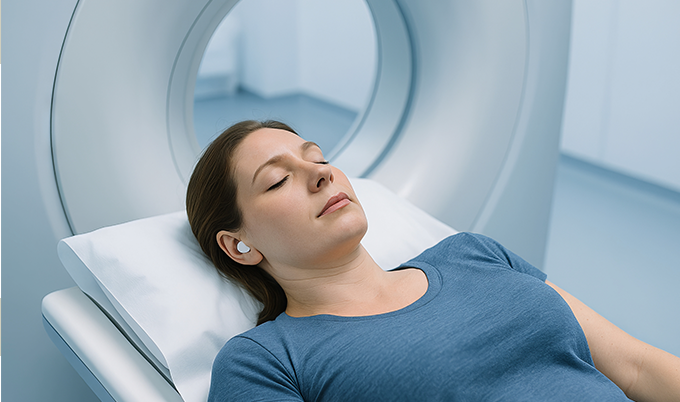
- Noise-canceling headphones reducing scanner sounds that trigger anxiety
Some advanced facilities use MRI-safe headphone systems with high-quality audio, turning scan noise from a stressor into background sound. Patients report feeling more relaxed and less aware of time passing when immersed in preferred audio.
Advanced Technology for Faster, More Comfortable Scans
Modern imaging equipment reduces anxiety by minimizing scan duration and improving patient comfort. Shorter scan times mean less time in confined spaces, reduced need to remain motionless, and faster resolution to pre-scan stress.
Technology improvements include:
- Wide-bore MRI scanners providing more space and reducing claustrophobic feelings
- Low-dose CT technology addressing radiation exposure concerns
- AI-enhanced imaging cutting scan times significantly while maintaining image quality
- Open MRI options for patients with severe claustrophobia
- Faster processing speeds reducing time spent in scanning position
Craft Body Scan utilizes advanced imaging technology designed for both accuracy and patient comfort. The AI-powered Whole-Body MRI available in Tulsa cuts traditional scan time nearly in half – from approximately 60 minutes to just 30 minutes – significantly enhancing patient comfort while maintaining exceptional diagnostic clarity. Faster scans mean less time managing anxiety and confined-space discomfort.
Real-Time Support During Scans
The ability to communicate with technologists during imaging procedures significantly reduces patient anxiety. Modern facilities implement communication systems that maintain connection even when staff must be in separate rooms for scan operation.
Communication features include:
- Intercom systems allowing patients to speak with technologists at any time
- Panic buttons or squeeze bulbs patients can activate if they need to stop
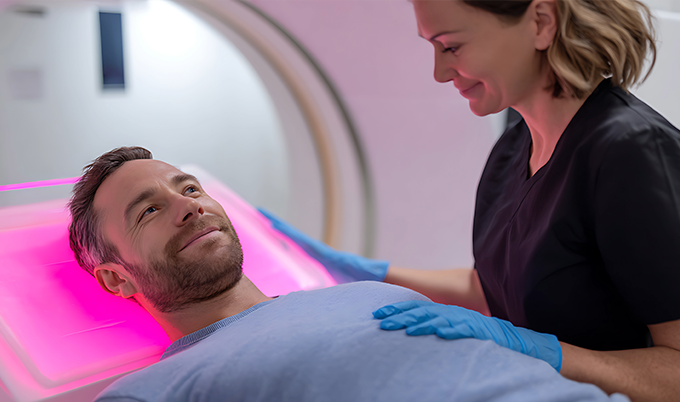
- Regular check-ins from staff monitoring patient comfort throughout the scan
- Clear instructions about breath-holding or position changes
- Reassurance and encouragement from experienced, empathetic staff
Knowing you can communicate instantly if needed provides psychological safety that reduces anticipatory anxiety. Most patients never need to use emergency communication systems, but their presence offers comfort that shifts the scan from a loss-of-control experience into a collaborative procedure.
Specialized Support for High-Anxiety Patients
Some patients experience severe imaging anxiety that standard comfort measures don’t fully address. Progressive facilities offer additional support options for patients with clinical anxiety, claustrophobia, or trauma histories affecting their scan tolerance.
Enhanced support options include:
- Extended consultation time before the scan to discuss specific concerns
- Gradual exposure allowing patients to see and enter the equipment before the actual scan
- Presence of support persons in the scan room when safe and feasible
- Sedation options for patients unable to complete scans due to severe anxiety
- Flexible scheduling accommodating patients who need more time or preparation
Quality imaging centers train staff to recognize anxiety symptoms and respond with empathy rather than frustration. Technologists who work regularly with anxious patients develop expertise in calming techniques, positioning modifications, and communication approaches that help patients complete necessary imaging.
Practical Steps for Your Next Scan
Understanding anxiety-reduction strategies helps, but implementation makes the difference. Here’s your practical action plan for managing imaging anxiety effectively.
Before Scan Day
Preparation reduces uncertainty and builds confidence. Start your anxiety-management plan as soon as you schedule your imaging appointment.
Take these preparatory steps:
- Practice your chosen breathing technique daily so it becomes automatic under stress
- Develop your guided imagery scene with rich sensory details you can recall easily
- Request procedural information from the imaging center about your specific scan type
- Watch educational videos showing what CT or MRI procedures look like
- Discuss your anxiety with the scheduling staff who can note your concerns
- Arrange comfortable transportation to reduce rushing or parking stress
- Get adequate sleep the night before to improve stress resilience
Some patients find it helpful to visit the imaging center before their appointment, familiarizing themselves with the location and environment. This reconnaissance reduces day-of uncertainty and allows you to plan your arrival, parking, and waiting strategy.
On Scan Day
Your scan day routine significantly affects anxiety levels. Build in time for anxiety-management techniques rather than rushing from one obligation to your appointment.
Implement these day-of strategies:
- Arrive 15 minutes early giving yourself time to settle and breathe before check-in
- Wear comfortable, loose clothing reducing physical discomfort during the scan
- Bring your own music if the facility allows personal devices
- Practice breathing exercises during your commute and in the waiting room
- Inform the technologist about your anxiety and any specific triggers
- Ask questions about anything unclear or concerning
- Use the restroom before your scan to prevent discomfort
When you communicate openly about anxiety, technologists can provide extra reassurance, explain each step more thoroughly, and offer comfort measures you might not receive otherwise. Most imaging professionals appreciate patients who speak up about concerns rather than suffering silently.
During the Scan
Active anxiety management during scanning prevents stress escalation and helps you remain still for quality images. Deploy the techniques you’ve practiced rather than hoping anxiety won’t surface.
Use these in-scan strategies:
- Begin breathing exercises immediately when positioned on the table
- Access your guided imagery as soon as scanning starts
- Focus on music or audio rather than scan noises
- Count breaths or use mental counting to occupy your mind
- Visualize the scan progress imagining completion approaching with each minute
- Remember you can communicate if you need support or have concerns
- Acknowledge anxiety without judgment, then return to your calming technique
Some patients find it helpful to think of the scan as a meditation practice – dedicated time to focus inward using breathing and visualization techniques. This reframe shifts scanning from an ordeal to endure into an opportunity to practice stress-management skills.
After Your Scan
Post-scan anxiety often centers on results waiting, but you can manage this stress too. Recognize that worry doesn’t change outcomes while it significantly affects your quality of life during the waiting period.
Manage post-scan stress by:
- Celebrating completion of an important health step regardless of results
- Planning distracting activities while waiting for results
- Limiting excessive research about hypothetical conditions
- Maintaining your breathing practice if result-anxiety surfaces
- Connecting with support people who can provide perspective
- Understanding typical timeline for receiving results reduces uncertainty
Most imaging results reveal either normal findings or conditions caught early enough for effective intervention. Focus on the proactive health step you’ve taken rather than catastrophizing about unlikely worst-case scenarios.
Take Control of Your Scan Experience
Imaging anxiety affects millions of patients annually, creating unnecessary suffering and occasionally interfering with necessary medical care. But you don’t have to accept anxiety as an inevitable part of diagnostic imaging.
Evidence-based breathing techniques provide immediate, accessible anxiety reduction requiring no special equipment or training. Mental preparation strategies – guided imagery, progressive muscle relaxation, cognitive reframing – build additional resilience against scan-related stress. Modern imaging centers support your comfort through clear communication, environmental design, audio distraction, advanced technology, and real-time assistance from empathetic staff.
The combination of personal anxiety-management techniques and professional support measures changes medical imaging from a dreaded experience into a manageable health appointment. You maintain agency through breathing exercises and mental preparation. Imaging centers provide the technological and human support that reduces scan duration, increases comfort, and offers reassurance throughout the process.
Research demonstrates what healthcare providers have long understood – informed, prepared patients experience less anxiety and better outcomes. Knowledge reduces fear. Practice builds confidence. Support creates safety. Together, these elements allow you to approach necessary medical imaging with calm rather than dread.
Your health deserves the clarity that diagnostic imaging provides. Preventive screenings detect serious conditions before symptoms appear, when treatment outcomes remain most favorable. Early detection of heart disease, cancer, and other life-threatening conditions dramatically improves survival rates and quality of life. But these benefits require actually completing the scan rather than canceling due to anxiety.
At Craft Body Scan, patient comfort isn’t an afterthought – it’s integrated into every aspect of the imaging experience. From the moment you schedule your appointment through results review, certified professionals guide you with transparency, expertise, and genuine care for your well-being. Advanced imaging technology minimizes scan time while maximizing diagnostic accuracy. Fast appointment scheduling, friendly staff, calming environments, and clear communication work together to ease anxiety and create positive experiences.
Take control of your health with Craft Body Scan’s early detection services. Whether you need a heart scan, lung screening, full-body scan, or specialized imaging, professional support and proven anxiety-reduction strategies ensure you complete necessary screening comfortably and confidently. Schedule your scan today and experience medical imaging designed for both diagnostic excellence and patient comfort.