


A CT (computed tomography) scan uses X-rays and a computer to create detailed cross-section images of your body. These images can show your bones, organs, blood vessels and many health problems, including tumors, heart disease, lung disease, internal bleeding and some causes of abdominal or pelvic pain.
This article explains what a CT scan shows in different parts of the body, where CT is especially helpful, and when it may not give a complete answer. It is for education only and does not replace medical advice from your healthcare provider.
At a glance
- CT scans create detailed images of bones, organs, blood vessels and soft tissues so doctors can look for disease and injury.
- They can reveal problems such as tumors, heart disease, lung disease, some causes of abdominal or pelvic pain, and internal bleeding.
- CT is powerful but not perfect. Normal images do not rule out every disease, and results always need to be interpreted with your doctor.
What does a CT scan show?
According to RadiologyInfo.org, from the Radiological Society of North America and the American College of Radiology, CT scans create detailed images of internal organs, bones, soft tissue and blood vessels and can even be reconstructed in 3D. What a CT scan shows depends on the part of the body being scanned and why the test is ordered. In general, CT can show:- The heart and major blood vessels
- Lungs and airways
- Liver, spleen, pancreas, kidneys and intestines
- Brain, skull and many bones
- Areas of bleeding, fluid, scarring or abnormal growths
5 major health problems a CT scan can reveal early
When serious conditions are found early, treatment options are often broader and outcomes may be better. Imaging tests like CT scans can sometimes reveal problems before you feel symptoms, giving you and your doctor more time to respond.At a glance: problems a CT scan can show
- Many types of cancer and suspicious masses
- Lung problems such as nodules, pneumonia and emphysema
- Coronary artery calcification and signs of heart disease
- Blood clots and internal bleeding
- Bowel disorders like appendicitis, diverticulitis and blockages
- Kidney stones and some urinary problems
- Certain brain injuries and spinal problems
1. Heart and blood vessel disease
A CT heart scan, often called a coronary calcium scan, can show calcium deposits and plaque in the coronary arteries. This helps your provider understand your risk of coronary artery disease and other cardiovascular problems. A chest CT also shows the heart, lungs and major blood vessels in the chest. It provides more detail than a standard chest X-ray for organs, blood vessels and bones in that area.
- Lungs and airways
- Heart and coronary arteries (depending on the protocol)
- Aorta and other major vessels
- Esophagus and parts of the chest wall
2. Tumors and enlarged lymph nodes
CT scans are frequently used to look for masses or tumors and to see whether nearby lymph nodes are enlarged. CT can show the location, size and shape of many tumors and can help surgeons or interventional radiologists plan targeted biopsies. The National Cancer Institute explains that CT is important for diagnosing and staging many cancers, but a biopsy is often required to confirm whether a mass is cancer. In practical terms:- CT can show a suspicious mass or enlarged lymph nodes.
- CT can help determine whether a known cancer appears to have spread.
- CT by itself cannot tell you with certainty if something is cancer.
3. Cancers in organs throughout the body
CT scans of the chest, abdomen and pelvis are often used together to look for cancers in organs such as the lungs, liver, pancreas, kidneys and lymph nodes, and to see whether those cancers appear to have spread. Again, CT is powerful but not perfect:- Very small tumors or cancers in certain soft tissues may not be visible on CT.
- Some cancers are better evaluated with MRI, PET, ultrasound or endoscopy.
- Normal CT images do not completely rule out cancer.
4. Precancerous colon polyps and colon cancer
A specialized scan called CT colonography, or “virtual colonoscopy,” uses CT to look at the colon and rectum. It is one of several accepted options for colorectal cancer screening. In many cases, CT colonography can detect larger polyps and colorectal cancers. If the scan finds suspicious polyps, you still need a standard colonoscopy so they can be removed or biopsied. So, does a CT scan show colon cancer? A CT colonography can detect many colorectal cancers and larger precancerous polyps, but small lesions can still be missed. It is a useful screening option, especially for people who are not good candidates for traditional colonoscopy. Craft Body Scan offers virtual colonoscopy (CT colonography) as a non-invasive way to evaluate the colon and rectum and to discuss follow-up options with your healthcare provider.5. Bone loss and osteoporosis risk
CT images can also be used for bone density analysis. When bone structure appears thin or fragile, it may suggest osteoporosis, a condition in which bones are more likely to break. With the right protocol, CT can:- Show thinning or weakening of the bone structure.
- Detect vertebral fractures or other injuries.
- Help estimate fracture risk when combined with your history and lab results.
| Type of CT scan | Main organs and structures it shows | Examples of issues it may help detect |
|---|---|---|
| Chest CT | Lungs, airways, heart, aorta and major vessels, parts of the esophagus and chest wall. | Lung nodules, infections, inflammation, blood clots in lung vessels, enlarged heart or lymph nodes. |
| Abdominal CT | Liver, gallbladder, pancreas, spleen, kidneys, adrenal glands, parts of the stomach and intestines. | Tumors, cysts, kidney stones, enlarged organs, internal bleeding and some causes of abdominal pain. |
| Pelvic CT | Bladder, uterus and ovaries or prostate, parts of the colon and small intestine, pelvic bones and lymph nodes. | Masses, enlarged lymph nodes, bladder problems, gynecologic or prostate issues and some bowel problems. |
| Abdomen and pelvis CT | Combination of abdominal and pelvic organs in a single scan. | Certain cancers, infections, inflammatory bowel disease, kidney stones, appendicitis and other urgent problems. |
| Head CT | Brain, skull, sinuses and some blood vessels. | Bleeding, skull fractures, large tumors, stroke and significant brain swelling. |
| Heart / coronary CT | Coronary arteries and parts of the heart and chest. | Coronary artery calcifications and plaque, some structural heart issues, incidental lung findings. |
CT vs MRI vs X-ray: what can a CT scan show that an MRI cannot?
You might wonder why your provider recommends a CT scan instead of an MRI or X-ray. CT and MRI both create detailed internal images, but they are not interchangeable. Each has strengths and limitations. CT tends to be better for:- Lungs and airways (MRI is less detailed for moving air).
- Many bone injuries and subtle fractures.
- Fresh bleeding and some emergency conditions.
- Calcifications, such as coronary artery calcium.
- Detailed views of the brain and spinal cord.
- Ligament, tendon and cartilage injuries.
- Certain pelvic and soft-tissue problems.
| Test | What it is best at | Typical use cases |
|---|---|---|
| CT scan | Fast, detailed images of lungs, many bones, bleeding and calcifications. | Trauma, chest and abdominal emergencies, coronary calcium scoring, lung cancer screening and full-body CT scans. |
| MRI | Very detailed soft-tissue imaging without ionizing radiation. | Brain and spinal cord imaging, many joint and ligament injuries, some pelvic and soft-tissue conditions. |
| X-ray | Quick overview of bones and some lung issues. | Broken bones, basic chest imaging and simple follow-up views. |
Do concussions show up on a CT scan?
The National Institute of Neurological Disorders and Stroke notes that many people with a mild traumatic brain injury or concussion have normal CT and MRI scans. CT is mainly used to look for serious complications, such as bleeding or swelling, that might need urgent treatment. A head CT scan can show bleeding, skull fractures or large structural injuries. A mild concussion may not show any visible changes on CT, so your symptoms and neurological exam are often more important than the scan result alone.What to expect on scan day (short version)
Many people searching for what does a CT scan show also want a quick sense of what the visit will feel like. Here is the short version:- You check in, review your health history and confirm whether contrast will be used.
- You remove metal objects and may change into a gown.
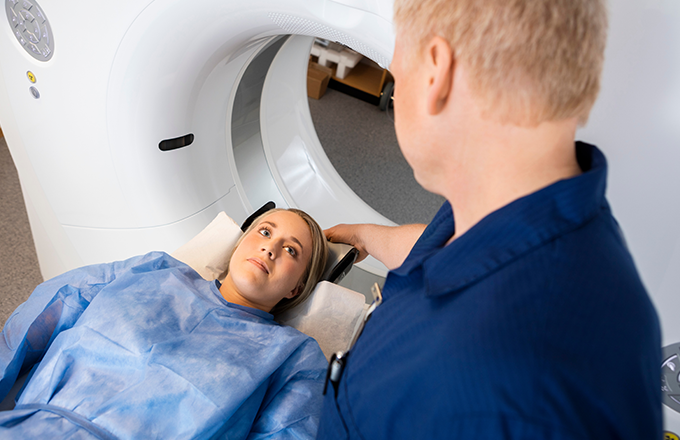
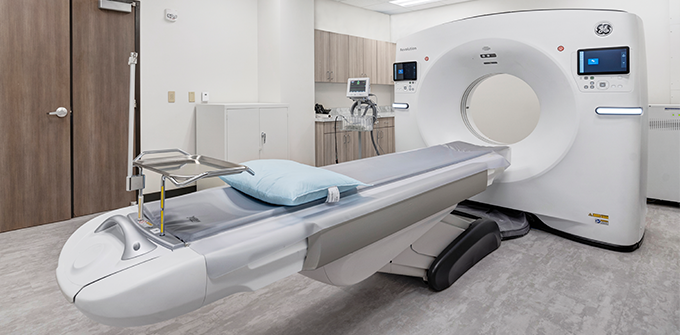
- You lie on a narrow table that slides into the CT scanner; the technologist talks to you from another room.
- The scan itself usually takes just a few minutes while the machine rotates and takes images.
- You go home right after the scan. A radiologist reads your images and your doctor reviews the results with you.
How safe is a CT scan?
CT scans use ionizing radiation, so the dose is higher than with standard X-rays. Organizations such as the U.S. Food and Drug Administration and the National Cancer Institute emphasize that the added cancer risk from a single medically needed CT scan is generally small, and that the benefits usually outweigh the risks when the test is appropriate. Imaging centers follow the “as low as reasonably achievable” principle when it comes to radiation. This means they work with your referring provider to:- Order CT only when the expected medical benefit outweighs the risk.
- Use the lowest radiation dose that will produce a useful image.
- Adjust settings based on your size, age and the body part being scanned.
Making sense of your CT results
After your scan, a radiologist reviews the images and writes a report. The report describes what looked normal, what looked different and may suggest follow-up imaging or other tests. It is important to remember:- A CT report is part of your overall medical picture. It does not replace a full evaluation.
- A normal CT scan does not guarantee that you have no disease.
- An abnormal CT scan does not always mean you have cancer or a serious condition.
Frequently asked questions about what CT scans show
Can a CT scan miss cancer?
Yes. CT scans are very good at showing many tumors and enlarged lymph nodes, but they can still miss small or early cancers, especially in soft tissues or areas that are difficult to image. That is why doctors often combine CT with other imaging tests, lab work and, when needed, a biopsy to confirm a diagnosis.Is a CT scan or MRI better for abdominal pain?
Neither test is better in every situation. CT is often preferred first for sudden abdominal pain because it is fast and can show many causes such as appendicitis, kidney stones or bowel obstruction. MRI may be chosen later for specific liver, biliary or pelvic issues. Your provider will decide which test fits your symptoms and medical history.Does CT show inflammation or only structural problems?
CT can show signs of inflammation, such as swelling, thickened tissues, fluid collections or inflamed bowel segments, particularly in the chest, abdomen and pelvis. However, it does not show every type of inflammation and usually needs to be interpreted alongside lab tests and your clinical exam.What does an abdominal CT scan show compared with a pelvic CT scan?
An abdominal CT scan focuses on organs such as the liver, gallbladder, pancreas, spleen and kidneys. A pelvic CT scan looks more closely at the bladder, reproductive organs, lymph nodes and pelvic bones. In many cases, an abdomen-and-pelvis CT is ordered to evaluate both regions at once.Can I schedule a CT scan without a referral?
Policies vary by clinic and by the type of scan. At Craft Body Scan, many preventive CT scans can be scheduled directly by patients, and results are then shared with your primary care doctor or specialist for diagnosis and follow-up. If you have active symptoms, it is still important to involve your healthcare provider before and after the scan.Ready to talk about CT scans and your health?
If you are wondering which CT scan makes sense for you, or you want to understand what your scan might show, our team can walk you through your options and help you plan the next steps with your doctor. You can explore full-body CT scans, focused heart scans, cancer screening packages and more — or simply start by scheduling a visit. Schedule a scanFAQs about what CT scans show
Can a CT scan detect cancer anywhere in the body?
A CT scan can detect many cancers and suspicious masses in areas such as the chest, abdomen and pelvis, but it cannot see every tumor or every part of the body with the same detail. It is often combined with other tests and sometimes followed by a biopsy to confirm whether an abnormality is cancer.
Will a CT scan always show the cause of my symptoms?
No imaging test can guarantee an answer in every case. A CT scan may show a clear cause, such as a mass, bleeding, infection or a blocked organ, but sometimes the scan looks normal even when symptoms are present. Your doctor uses CT results together with your history, exam and lab tests to decide on next steps.
How long does it usually take to get CT scan results?
The scan itself is typically completed in minutes, but the images still need to be reviewed by a radiologist. In many outpatient settings, reports are available within a few business days, and urgent findings are communicated sooner. Craft Body Scan encourages every patient to review final results with their own healthcare provider.
How often can I safely have a CT scan?
There is no single number of CT scans that is safe for everyone. Each scan uses ionizing radiation, so your doctor weighs the expected benefit of each study against your overall radiation exposure, age and health risks. It is important to share your imaging history so your care team can avoid unnecessary repeat scans.
Does a CT scan show all organs in my chest, abdomen and pelvis at once?
A combined chest, abdomen and pelvis CT can show many organs in one study, including the lungs, heart, major blood vessels, liver, pancreas, kidneys, bowel and pelvic organs. However, the exact area covered depends on the protocol your doctor orders, and some conditions still require targeted imaging or other tests.