If you have been putting off a colonoscopy because of the prep, the scope, or the idea of sedation, you are not alone. Many adults wonder whether there is a non invasive colonoscopy option that feels more manageable but still gives reliable information about colon health. A modern alternative called a virtual colon scan – also known as CT colonography – uses advanced CT imaging instead of a long scope to evaluate the colon for cancer and precancerous polyps.
This non invasive colonoscopy procedure does not replace every traditional colonoscopy, but for many people it offers a practical non invasive alternative to colonoscopy that can help them finally get screened and make a plan with their healthcare provider.
- A non invasive colonoscopy uses CT imaging, not a scope, to examine the inside of the colon.
- The exam usually takes only a few minutes of scan time and does not require IV sedation.
- For many average-risk adults, CT colonography every several years is an accepted screening option when results are normal.
- If something suspicious is found, a standard colonoscopy is still required to remove or biopsy it.
What Is a Non Invasive Colonoscopy?
When people search for a “non invasive colonoscopy,” they are usually talking about virtual colonoscopy or CT colonography. Instead of guiding a flexible scope through the entire colon, the imaging team uses a low-dose CT scanner to create detailed two-dimensional and three-dimensional pictures of the inside of the colon.
The goal is the same as with a standard colonoscopy:
- Find polyps that could become cancer in the future.
- Detect cancers as early as possible, when treatment options are usually broader.
If you would like a deeper technical explanation of how a virtual colonoscopy works, you can read our article what is a virtual colonoscopy for more detail.
Virtual colon scans are recognized in major screening guidelines as one of several acceptable alternatives to colonoscopy for adults at average risk, alongside stool-based tests and standard colonoscopies performed at regular intervals.
Why Colon Cancer Screening Matters
Colorectal cancer is one of the most commonly diagnosed cancers in the United States, yet it is also one of the most preventable. The American Cancer Society and the U.S. Preventive Services Task Force recommend that most adults at average risk start colorectal cancer screening around age 45, using one of several approved tests.
Screening is important for two main reasons:
- It can find cancer early, when treatment is often more effective.
- It can identify precancerous polyps so they can be removed before they turn into cancer.
Whether you choose a stool test, a standard colonoscopy, or a non invasive colonoscopy procedure such as CT colonography, the most important step is to choose a test that you can complete on schedule and repeat as recommended.
Non Invasive Colonoscopy vs Traditional Colonoscopy
Both tests aim to protect you from colorectal cancer, but they work very differently. Understanding the differences can make it easier to decide which option makes sense for you. For an even more detailed comparison, you can also read our article virtual colonoscopy vs traditional colonoscopy.
Traditional colonoscopy
- Uses a long, flexible tube with a camera to examine the entire colon directly.
- Typically requires IV sedation, so you need someone to drive you home.
- Allows the doctor to remove polyps and take biopsies during the same procedure.
- Remains the standard test for many higher-risk patients and for treating abnormalities.
Non invasive colonoscopy (virtual colon scan)
- Uses a low-dose CT scanner to create detailed images of the colon interior.
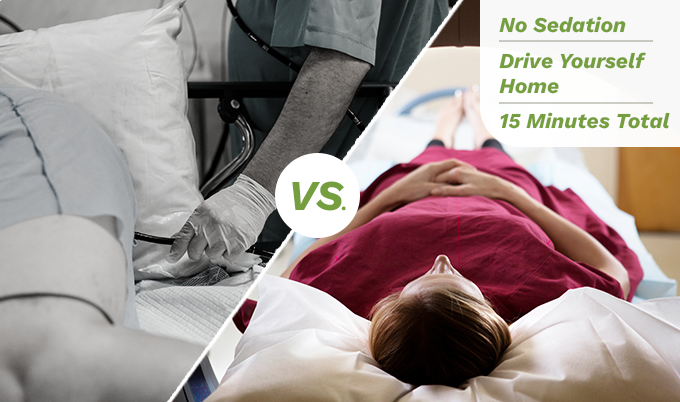
- Does not use IV sedation; most people can drive themselves home afterward.
- Primarily a detection tool, not a treatment procedure.
- If the scan finds polyps or suspicious areas, a follow-up colonoscopy is needed to remove or sample them.
When someone asks, “Is there an alternative to a colonoscopy?”, the accurate answer is yes: there are stool-based tests and imaging tests like CT colonography that can serve as alternatives to colonoscopy for some individuals. However, any abnormal result on those tests still needs a standard colonoscopy to complete the screening process.
If you prefer a full deep dive into the technology, preparation, and what to expect, you may also find our guide everything you need to know about a virtual colonoscopy helpful.
How the Non Invasive Colonoscopy Procedure Works
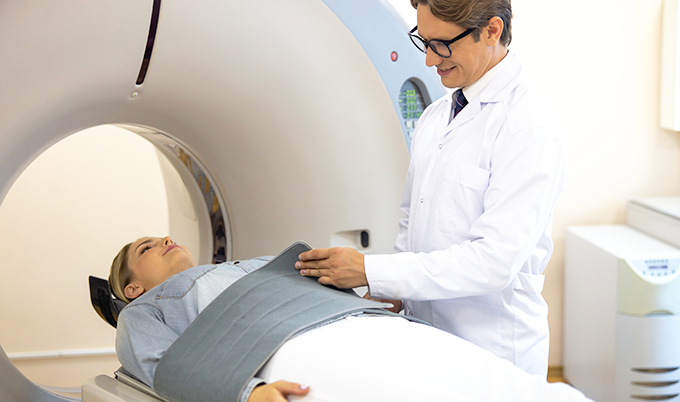
A virtual colon scan is designed to be straightforward and efficient. While the bowel preparation is similar to a colonoscopy, the imaging portion is typically much quicker and does not use IV sedation.
- Bowel preparation. Your colon must be as clean as possible so the radiologist can see the lining clearly. You will receive instructions about a diet, a bowel prep solution, and possibly small amounts of contrast that help distinguish any remaining stool from true polyps on the images.
- Gentle gas inflation. In the CT room, a technologist places a small, flexible tube just inside the rectum to introduce air or carbon dioxide. This gently inflates the colon so the walls separate and can be seen clearly on the scan. This step can feel briefly uncomfortable but usually lasts only a short time.
- Two quick CT scans. You lie on the CT table first on your back and then on your stomach or side. Each scan typically takes just a few seconds of breath-holding while the images are acquired. Total scan time is often under 15 minutes.
- 3D reconstruction and expert review. Specialized software converts hundreds of images into a virtual “fly-through” of the colon. A radiologist trained in CT colonography carefully reviews these images, looking for polyps, growths, or other abnormalities.
This non invasive colonoscopy procedure uses low-dose radiation tailored for screening purposes. For most people, the potential benefit of detecting cancer or advanced polyps early outweighs this small exposure, but it is always appropriate to ask your clinician how this fits into your overall health picture.
What Colon Scans Can and Cannot Detect
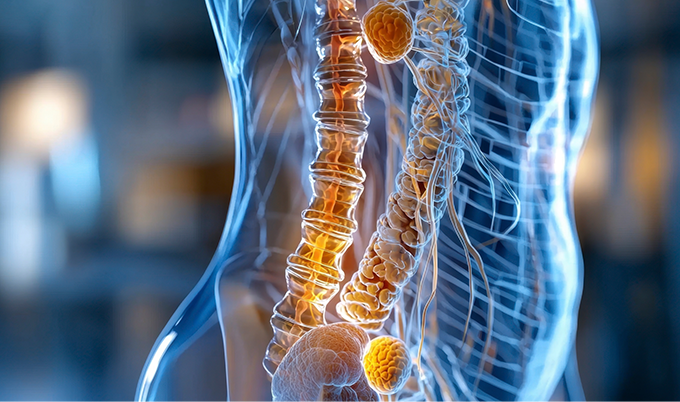
CT colonography is designed to find the lesions that matter most for preventing colorectal cancer and catching it early.What it usually detects well
- Larger polyps. Virtual colon scans are highly sensitive for polyps above a certain size, which are more likely to contain advanced changes. These are the lesions that guidelines focus on when evaluating the effectiveness of a non invasive colonoscopy.
- Established cancers. Cancers often appear as masses, irregular narrowings, or thickened sections of the colon wall that are generally visible on CT images.
- Structural changes. The scan can show strictures, diverticula, and other anatomical variations that might help explain certain symptoms.
- Some findings outside the colon. Because the scan includes the abdomen and pelvis, radiologists sometimes identify abnormalities in other organs that may require follow-up.
Key limitations
- Very small or flat lesions can be more difficult to detect compared with direct colonoscopy.
- Polyps and suspicious areas cannot be removed or biopsied during the scan.
- If the non invasive colonoscopy reveals concerning findings, a standard colonoscopy is still needed for diagnosis and treatment.

Who a Colon Scan May – and May Not – Be Right For
Screening decisions are personal, and the right test depends on your risk factors and preferences. Still, there are common situations where a non invasive alternative to colonoscopy is worth discussing.When a non invasive colonoscopy may be considered
- You are at average risk for colon cancer based on your age and family history.
- You want to avoid IV sedation or have medical reasons to limit sedation.
- You prefer a non invasive test and need to be able to drive yourself home after the exam.
- You previously had an incomplete colonoscopy and still need the rest of the colon evaluated.
- You have delayed screening for years because a traditional colonoscopy feels overwhelming and you want a way to get started.
When standard colonoscopy may be recommended first
- You have a personal history of colorectal cancer or advanced polyps.
- You have a strong family history of colorectal cancer or a known hereditary syndrome.
- You have inflammatory bowel disease such as Crohn’s disease or ulcerative colitis.
- You are experiencing concerning symptoms such as rectal bleeding, unexplained weight loss, or persistent changes in bowel habits.
- You are pregnant or may be pregnant, when avoiding radiation is especially important.
Colon Scan Benefits and Limitations at a Glance
Benefits
- No IV sedation; most people can return to normal activities and drive themselves home.
- Imaging time is typically short, often around 15 minutes.
- Non invasive test: no scope traveling through the entire colon.
- Provides 2D and 3D views of the colon to help detect important polyps and cancers.
- Can sometimes reveal helpful information about other organs in the abdomen and pelvis, depending on what the scan shows.
Limitations
- Uses a small amount of radiation, which may be a concern for some people.
- Cannot remove polyps or take biopsies – colonoscopy is still needed if something is found.
- Requires bowel preparation and gas inflation, which can be uncomfortable.
- Very small or flat lesions can be more challenging to detect than with direct colonoscopy.
- Incidental findings outside the colon may lead to additional testing that ultimately shows benign conditions.
Preparing for a Virtual Colonoscopy
Preparation is what allows a non invasive colonoscopy procedure to deliver clear, reliable images. Your imaging center will provide a detailed plan, but most protocols include the same core steps.The day before your scan
- Follow the recommended diet, often a clear-liquid or low-residue plan.
- Take the prescribed bowel prep solution exactly as instructed.
- Stay near a bathroom once the prep begins, as bowel movements can be frequent.
- Ask your care team in advance if anything in your instructions is unclear.
On the day of your scan
- Wear comfortable clothing without metal zippers or buttons if possible.
- Follow any fasting instructions from your imaging center.
- Arrive a little early so you can move through the process without feeling rushed.
- Plan to return to normal activities afterward, since IV sedation is not used.
Understanding Your Non Invasive Colonoscopy Results
Your results come in the form of a radiologist’s report that your ordering clinician reviews with you. While the language varies, most reports fall into a few broad categories.- No significant findings. No polyps above a certain size and no suspicious masses are seen. For many average-risk adults, this may mean several years before the next imaging-based test is needed, though your schedule may differ.
- Small or intermediate polyps. Polyps in middle size ranges may be managed with closer imaging follow-up or a colonoscopy, depending on your risk factors and your clinician’s judgment.
- Larger polyps or suspicious areas. Larger or more concerning findings usually require a standard colonoscopy to remove tissue and send it for further evaluation.
- Incidental or unclear findings. Sometimes the scan shows something outside the colon that needs follow-up, or image quality is limited by residual stool or motion. In those situations, your clinician may recommend additional imaging, repeat CT colonography, or colonoscopy.
Questions to Ask About Insurance and Coverage
Coverage for CT colonography can vary between insurance plans. Before scheduling, you may want to contact your insurer or benefits office and ask questions such as:- Is a non invasive colonoscopy covered as a screening test under my plan, or is it considered a diagnostic imaging exam?
- If my virtual colon scan is abnormal, will a follow-up colonoscopy still be covered as part of the screening process?
- Do I need to use specific imaging centers or radiology groups for in-network coverage?
- Will I have a copay or need to meet a deductible for this exam?

Choosing Between a Colon Scan and Colonoscopy With Your Doctor
Before you decide on a screening strategy, it can be helpful to bring a short question list to your appointment so you and your clinician can choose the approach that fits your risk factors and preferences.
- Given my age, family history, and health, which screening tests are reasonable options for me?
- How do you use non invasive colonoscopy in your practice?
- If my scan shows polyps, how quickly could I get a standard colonoscopy for follow-up?
- How is a non invasive colonoscopy procedure covered by my insurance compared with standard colonoscopy?
- How often will I need to repeat screening if my test is normal?
The Centers for Disease Control and Prevention provides additional educational resources on screening options and what it means when a test is abnormal.
Scheduling a Non Invasive Colonoscopy at Craft Body Scan
If you live in an area served by Craft Body Scan and you are considering a non invasive colonoscopy, our team can help you:
- Understand how virtual colon scans fit into your overall screening plan.
- Coordinate with your primary care provider or specialist if one is involved in your care.
- Review preparation instructions so you know exactly what to expect on the day of your scan.
- Plan appropriate next steps if your results show anything that needs follow-up.
You can learn more about our approach on the Virtual Colonoscopy page or explore how virtual colonoscopy fits into prevention in general across our virtual colonoscopy blog resources.
If you have been postponing screening because you were not sure whether there was a non invasive alternative to a colonoscopy, a virtual colon scan may be the step that finally makes prevention feel possible. The most important part of any screening plan is follow-through: choosing a test you can complete and repeating it as recommended over time.